Storm Prep
Hurricane Season AC Prep Checklist: How to Protect Your System Before, During, and After the Storm
What to do with your AC before a hurricane, while it's passing, and after the power comes back — plus a printable checklist for New Orleans homeowners.
 Bradley Air Team 9 min read
Key takeaways
- Do the prep work early in the season: a tune-up, surge protection, and photos of your unit and its model/serial label.
- When the storm arrives or the power starts flickering, turn the AC off at the thermostat and then the breaker.
- If floodwater reached the outdoor unit, air handler, or ducts, don't turn it on — have it inspected first.
- After power returns, wait until it's stable before restarting, and don't expect a portable generator to run central air.
- Start drying the house within 24–48 hours and document everything before cleanup for your insurance claim.
In this guide
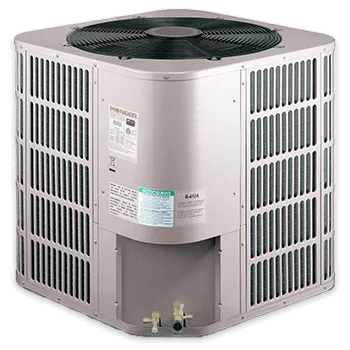
Hurricane season runs from June 1 through November 30, and anyone who's lived in New Orleans for a few years knows the drill: water, batteries, gas in the car, a plan for the pets. Your air conditioner rarely makes that list, but it's one of the most expensive pieces of equipment you own — and it sits outside, on the ground, exposed to wind, debris, power surges, and floodwater.
The good news is that most storm damage to AC systems is either preventable or made worse by what happens after the storm, not during it. Here's what to do before, during, and after, with a printable checklist at the end.
Before the storm: start early in the season
The busiest stretch of hurricane season is generally mid-August through mid-October. The best time to get ready is before a storm is even on the map, when you're not competing with everyone else for supplies and appointments.
Get a service visit before peak season
A spring or early-summer tune-up catches the parts most likely to fail when the power gets rough: weak capacitors, pitted contactors, loose or corroded wiring. A part that's limping along in July can give out the first time it sees a power surge or a string of brownouts. It's much easier to replace a small part on a calm Tuesday than to hunt for one the week after a storm, when everyone in town needs the same thing.
Clear the yard around the unit
In high winds, anything loose becomes a projectile, and your condenser's thin aluminum fins are an easy target. Walk the yard and bring in or tie down potted plants, lawn furniture, grills, garbage cans, kids' toys, and loose lumber. Trim dead limbs that hang over the unit. Keep the normal 2 feet of clearance around it so it can breathe when you're running it before and after the storm.
Inspect the tie-downs and hurricane straps
Take a look at how your outdoor unit is attached to its pad or platform. Many units are anchored with metal straps, brackets, or clips bolted into the pad. Rusted, loose, or missing anchors should be fixed before a storm, not after. This matters even more for units on raised platforms or stands, which are common around town, and for rooftop units on commercial buildings — if you manage a building, our commercial RTU team can check curb attachments and access panels.
Add surge protection
Storms bring lightning, and the days of power restoration that follow can bring surges, sags, and rapid on-off cycling. Modern AC systems have control boards, variable-speed motors, and inverter electronics that don't tolerate that well. Afternoon thunderstorms do the same thing all summer long. The best setup is two layers: a whole-home surge protector at your main electrical panel (installed by a licensed electrician) and a dedicated surge protector for the HVAC equipment at the outdoor disconnect. It won't stop a direct lightning strike, but it helps with the everyday surges that wear out electronics.
Photograph your unit and its labels
Take clear photos of your outdoor unit from all four sides, the pad or platform it sits on, and the surrounding yard. Then photograph the model and serial number label (the data plate) on both the outdoor unit and the indoor unit or air handler. Save them somewhere that won't be in the house if the house floods — cloud storage or an email to yourself. Keep your maintenance and installation receipts with them. If you need to file a claim, “here's what it looked like in June” is a lot stronger than a description from memory.
Know where your disconnect and breaker are
The outdoor disconnect is the small gray metal box mounted on the wall near your condenser. Inside is usually a pull-out block or a lever that cuts power to the unit. Your system will also have one or more breakers in the main electrical panel — often one for the outdoor unit and one for the indoor unit. If they aren't labeled, label them now. You don't want to be guessing with a flashlight when the lights are flickering.
Consider elevation if you're in a flood-prone area
For a ground-level condenser, floodwater is the biggest threat — far more than wind. Raising the outdoor unit onto a sturdy platform at or above the Base Flood Elevation (BFE) for your property is one of the best long-term protections you can buy. If you're replacing equipment or doing a major renovation, local floodplain rules may require it anyway. You can look up your flood zone on FEMA's flood maps, and we can talk through options when we quote an AC installation. In raised homes, remember that air handlers and ductwork under the house are exposed to rising water too.
During the storm
- Turn the system off at the thermostat, then flip the breaker (or pull the outdoor disconnect), when the storm arrives or as soon as the power starts flickering. Brownouts and rapid on-off cycling are hard on compressors and control boards.
- Don't cover a running unit. The condenser needs to move a lot of air. Covering it while it runs can overheat it. Outdoor units are built to handle rain, so a cover isn't necessary — and a tarp in hurricane winds turns into a sail.
- If you do cover it, only do so with the power off, and remove the cover before the system is turned back on.
- Stay inside. Don't go out during high winds to check on the unit. It can wait.
- If you're running a generator, keep it outdoors and well away from doors, windows, and vents, and make sure your carbon monoxide detectors have working batteries.
After the storm
If floodwater reached it, don't turn it on
This is the most important rule in this whole article. If water rose to the base of your outdoor unit or reached the indoor unit, air handler, or ductwork, do not turn the system on — even if it looks fine once the water goes down. Water and silt get into electrical components, motors, and controls, and brackish water from storm surge speeds up corrosion. Powering a flooded unit can cause a short, damage components that might have been salvageable, and create a shock hazard.
Have a technician inspect it first. Some components can be cleaned and tested; submerged electrical parts, motors, and controls often need replacement. Ductwork and duct insulation that sat in floodwater usually has to be replaced, because it can't be reliably cleaned and dried.
Inspect the unit from a safe distance
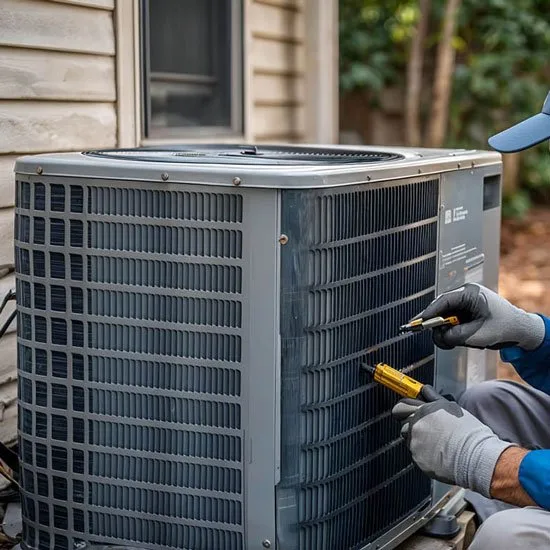
Once it's safe to go outside — watch for downed power lines and standing water near anything electrical — walk around the unit and look, without touching:
- Branches, shingles, or other debris on top of or inside the unit
- Bent or flattened coil fins along the sides
- Crushed or kinked copper refrigerant lines, or torn line insulation
- The unit shifted on its pad, tilted, or knocked off its platform
- Damage to the disconnect box, conduit, or wiring
- A hissing sound or oily residue on the lines, which can mean a refrigerant leak
If you see any of these, leave the power off and schedule a storm inspection. Light debris you can pick off by hand with the power off is fine to remove. Anything involving the lines, wiring, or the unit's position is a job for a pro.
Wait for power to stabilize before restarting
When Entergy restores power, it often blinks on and off as crews work through the grid, and voltage can run low for a while. Give it time — a few hours of steady power is better than a few minutes. Then restart in order:
- 1Make sure the thermostat is set to OFF.
- 2Turn the breaker back on (and reinsert the disconnect if you pulled it).
- 3Wait a few minutes, then set the thermostat to COOL at a moderate setting, not 65.
- 4Watch and listen for the first 15 minutes. The outdoor fan should spin, and you shouldn't hear grinding, rattling, or loud buzzing.
- 5After 15 minutes, check that the air from your vents is roughly 15–20°F cooler than the air going into the return. Our heat wave guide explains how.
If the breaker trips, don't keep resetting it. Leave it off and call for AC repair. Repeated resets can turn a small electrical problem into a dead compressor.
A word of caution about generators
Portable generators rarely run central air conditioning safely. When a compressor starts, it pulls a brief surge of current several times higher than what it uses while running. Most portable generators can't supply that surge — the generator bogs down or trips, and the low voltage that results is hard on the compressor.
Running central AC on backup power usually means a properly sized standby generator with a transfer switch, installed by a licensed electrician. A soft-start kit on the compressor reduces that startup surge and can make a smaller generator workable, but the whole setup still needs to be sized by a professional. For many families, a more realistic plan is cooling one room: an inverter-driven ductless mini-split or a window unit draws far less power and starts more gently.
Dry out the house within 24–48 hours
Mold can start growing on wet materials within 24 to 48 hours, and our heat and humidity give it every advantage. Pull out wet carpet, padding, drywall, and insulation. Run fans and dehumidifiers. Once your AC has been inspected and cleared — and only if the ductwork wasn't flooded — running it helps pull moisture out of the house. Running a system with flooded ducts just spreads contamination through every room. After any storm, change your air filter; it will have caught a lot of dust and debris. If you notice musty odors afterward, our indoor air quality service can help, and our humidity guide covers the warning signs.
Document everything for insurance
- Photograph and video all damage before cleanup or repairs, with the date noted.
- Make temporary repairs to prevent further damage, and keep every receipt.
- Hold onto damaged parts and equipment until your adjuster has seen them or tells you it's okay to dispose of them.
- Get a written assessment from a licensed HVAC contractor describing what was damaged and why.
- Know that flood damage is typically covered by flood insurance, not a standard homeowners policy, while wind damage typically falls under homeowners or wind coverage. Your adjuster may need to know which caused what.
Your printable hurricane season AC checklist
Before the storm
- Schedule a tune-up early in the season
- Clear loose items and trim dead limbs near the outdoor unit
- Check that straps, brackets, or tie-downs are tight and rust-free
- Install whole-home and HVAC surge protection
- Photograph the unit, pad, and model/serial labels (indoor and outdoor) and store them off-site
- Label your AC breakers and find the outdoor disconnect
- Check your flood zone and consider elevating a ground-level unit
- Change the air filter and pre-cool the house as the storm approaches
During the storm
- Turn the system off at the thermostat, then the breaker or disconnect
- Don't cover a running unit; remove any cover before restarting
- Stay inside — don't check the unit in high winds
- Run generators outdoors only, far from doors and windows
After the storm
- If floodwater touched the unit, air handler, or ducts, leave it off and call for an inspection
- Look for debris, bent fins, crushed lines, or a shifted unit — without touching
- Wait for steady power before restarting
- Restart: thermostat OFF, breaker on, wait a few minutes, then COOL
- Check airflow and the temperature split after 15 minutes
- Start drying the house within 24–48 hours and change the filter
- Photograph damage before cleanup and keep receipts and damaged parts
Storm damage or a system that won't restart?
Call or text (504) 450-9595 — our emergency line is open 24/7, and we never charge overtime fees. Our NATE-certified techs will inspect your system, give you flat-rate upfront pricing, and put what they find in writing for your insurance. Prefer to plan ahead? Book a pre-season storm check.
Call or text (504) 450-9595Frequently asked questions
Should I cover my AC unit during a hurricane?
Should I turn off my AC during a hurricane?
Can I run my central AC on a portable generator?
My AC unit sat in floodwater. Can I turn it on once it dries out?
Does homeowners insurance cover hurricane damage to my AC?
Written by the Bradley Air team — NATE-certified techs who've been keeping New Orleans cool since 2005. Have a question about your system? Call or text (504) 450-9595.